Now Reading: SAMHSA Releases Annual National Survey on Drug Use and Health
-
01
SAMHSA Releases Annual National Survey on Drug Use and Health

Four years of multimode data available for reporting trends
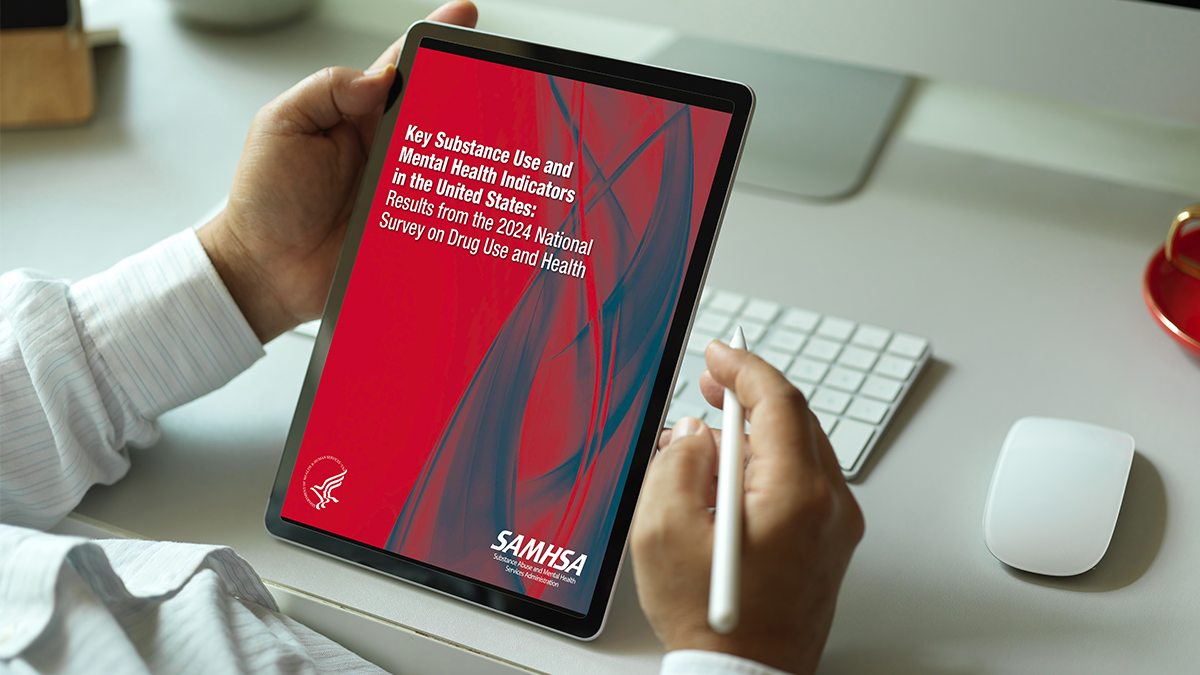
Today, the Substance Abuse and Mental Health Services Administration (SAMHSA) released the results of the 2024 National Survey on Drug Use and Health (NSDUH), which shows how people living in United States reported their experience with mental health conditions, substance use and pursuit of treatment. This year marks the first year since 2020 in which there are at least four years of comparable data for key NSDUH outcomes to enable reporting of trends.
“The annual NSDUH provides timely statistical information on substance use and mental health in the U.S.,” said SAMHSA Principal Deputy Assistant Secretary Dr. Art Kleinschmidt. “These data are incredibly valuable to researchers, clinicians, policymakers, and others, allowing for greater understanding of the nation’s behavioral health, and to help inform actions in support of President Trump’s vision to Make America Healthy Again.”
The 2024 NSDUH provides a national snapshot of behavioral health in the United States based on self-reported responses from nearly 70,000 people. In addition, the 2024 NSDUH marks the first year since 2020 in which there are at least four years of comparable data for key NSDUH outcomes, adjusting for survey design changes since 2020, enabling reporting of trends for the first time since 2019. The 2024 NSDUH report includes the following key findings.
Mental Health
- Among adults aged 18 years or older, the percentage who had any mental illness (AMI) or serious mental illness (SMI) in the past year showed no change from 2021 to 2024.
- In 2024, 23.4% of adults (or 61.5 million people) had AMI in the past year.
- In 2024, 5.6% of adults (or 14.6 million people) had SMI in the past year.
- Among adolescents aged 12 to 17 years in 2024, 18.8% (nearly 1 in 5) had moderate or severe symptoms of generalized anxiety disorder (GAD) including 10.6% who had moderate symptoms and 8.2% who had severe symptoms. The 2024 NSDUH is the first time this measure of anxiety symptoms has been available; thus, there are no prior NSDUH data estimates to compare to for this measure.
- Among adults aged 18 or older in 2024, 7.4% had moderate or severe symptoms of GAD, including 4.7% who had moderate symptoms and 2.7% who had severe symptoms.
- Among adolescents aged 12 to 17, the percentage who had serious thoughts of suicide in the past year declined from 12.9% in 2021 to 10.1% in 2024.
- The percentage who made a suicide plan in the past year declined from 6.2% in 2021 to 4.6% in 2024.
- The percentage who attempted suicide in the past year declined from 3.6% in 2021 to 2.7% in 2024.
- Among adolescents aged 12 to 17, the percentage who had a major depressive episode in the past year declined from 20.8% in 2021 to 15.4% in 2024.
Substance Use
- Among people aged 12 years or older in 2024, 58.3% used tobacco products, vaped nicotine, used alcohol, or used an illicit drug in the past month, defined as “current use”.
- 46.6% drank alcohol
- 16.7% used a tobacco product
- 9.6% vaped nicotine
- 16.7% used an illicit drug
- Among people in 2024 who used nicotine products in the past month, 71.5% of adolescents aged 12 to 17 years and 50.3% of young adults aged 18 to 25 years only vaped nicotine and did not use tobacco products. Among adults aged 26 years or older who used nicotine products in the past month, 18.0% only vaped nicotine, and 65.6% used only tobacco products.
- Among the 134.3 million current alcohol users aged 12 years or older in 2024, 57.9 million people (or 43.1%) were past month binge drinkers.
- Among people 12 or older, past-year use of the following substances declined between 2021 and 2024.
- Cocaine, from 1.7% in 2021 to 1.5% in 2024
- Prescription opioid misuse, from 3.0% in 2021 to 2.6% in 2024
- Among people 12 or older, past-year use of the following substances increased between 2021 and 2024.
- Marijuana, from 19.0% in 2021 to 22.3% in 2024
- Hallucinogens, from 2.7% in 2021 to 3.6% in 2024
- Among people 12 or older, 16.8% (or 48.4 million people) had a past-year substance use disorder (SUD).
- The percentage of people 12 or older with a drug use disorder in the past year increased from 8.7% in 2021 to 9.8% in 2024.
- The percentage of people 12 or older with an alcohol use disorder in the past year decreased from 10.6% in 2021 to 9.7% in 2024.
- In 2024, among adults aged 18 or older, 33.0% (or 86.6 million people) had either AMI or an SUD in the past year.
Treatment Services
- Among adolescents aged 12 to 17 in 2024 with a co-occurring Major Depressive Episode (MDE) and an SUD in the past year, 72.1% received either substance use treatment or mental health treatment in the past year, and 27.9% received neither type of treatment.
- Among people aged 12 or older in 2024 who were classified as needing substance use treatment in the past year, about 1 in 5 (19.3% or 10.2 million people) received substance use treatment in the past year. Among the 27.9 million people aged 12 or older with a past year alcohol use disorder, 2.5% (or 697,000 people) received medications for alcohol use disorder (MAUD) in the past year.
- Among the 4.8 million people aged 12 or older with a past year opioid use disorder 17.0% (or 818,000 people) received medications for opioid use disorder (MOUD) in the past year.
- Among the 61.5 million adults aged 18 or older in 2024 with AMI in the past year, 52.1% (or 32.0 million people) received any mental health treatment in the past year.
- Among the 14.6 million adults aged 18 or older in 2024 with SMI in the past year, 70.8% (or 10.3 million people) received any mental health treatment in the past year.
Recovery
- In 2024, 31.7 million adults aged 18 or older (or 12.2%) perceived that they ever had a problem with their use of alcohol or drugs. Among these adults, 74.3% (or 23.5 million people) considered themselves to be in recovery or to have recovered.
- In 2024, 67.8 million adults aged 18 or older (or 26.1%) perceived that they ever had a mental health issue. Among these adults, 66.9% (or 45.0 million people) considered themselves to be in recovery or to have recovered.
About the National Survey on Drug Use and Health
Conducted by the federal government since 1971, the NSDUH is the primary source of statistical information on self-reported substance use and mental health of the U.S. civilian, noninstitutionalized population 12 or older.
The NSDUH measures include:
- Use of illegal drugs, prescription drugs, alcohol, and tobacco,
- Substance use disorder and substance use treatment,
- Major depressive episodes, anxiety, suicidal thoughts and behaviors, and other symptoms of mental illness, mental health care, and
- Recovery from substance use and mental health disorders.
If you or someone you know is struggling or in crisis, help is available. Call or text 988 or chat at 988lifeline.org. To learn how to get support for mental health, drug or alcohol issues, visit FindSupport.gov. If you are ready to locate a treatment facility or provider, you can go directly to FindTreatment.gov or call 800-662-HELP (4357).
Related Posts



Stay Informed With the Latest & Most Important News











Advertisement