Now Reading: Zelensky says giving Ukrainian territory to Russia is ‘main problem’ after peace talks with US
-
01
Zelensky says giving Ukrainian territory to Russia is ‘main problem’ after peace talks with US
Zelensky says giving Ukrainian territory to Russia is ‘main problem’ after peace talks with US

‘A very short time to agree a genuine, sustainable peace in a complex war’published at 22:15 GMT 23 November
Imogen Foulkes
Reporting from Geneva
When US Secretary of State Marco Rubio and Ukraine’s chief negotiator Andriy Yermak first came out to talk the press early on Sunday evening, they took no questions, but insisted the talks had gone well.
They promised to come and talk to us again within a couple of hours. While we waited, I nipped out into the freezing Geneva evening for a few minutes (to talk to BBC World Service in fact), and saw, through the window of the room next to the media pen, the entire negotiating team.
Rubio, flanked by US envoy Steve Witkoff and US Army Secretary Dan Driscoll.
What I couldn’t see was who was on the other side of that big negotiating table, but we had been told the European delegation (the UK, France, and Germany all sent senior security officials to Geneva) were in the room.
Rubio was animated, gesticulating, and looking, from a distance, a trifle impatient. Oh to be a fly on the wall.
Then that second media briefing arrived – but no Ukraine this time, only the US. Alone, Rubio repeated that progress had been “substantial”.
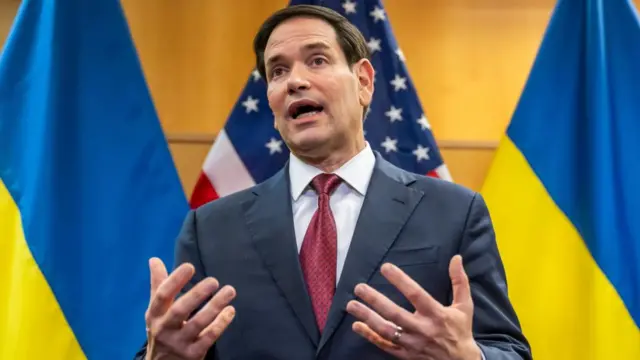 Image source, AP
US Secretary of state Marco Rubio, talks to the press
On what exactly, he would not be drawn. Asked about Europe’s involvement, he said he had “walked them through” the US plan, and was “not aware” of any alternative proposals from the EU side.
This despite European leaders making clear that Ukraine’s borders must not be changed by force. The US plan envisages things Europe and Kyiv find deeply dismaying – not just giving territory to Russia, but reducing the size of its armed forces, and abandoning plans to join Nato.
And Rubio appeared to echo his boss President Donald Trump’s desire to get this deal done quickly. It might not be Thursday (the president’s suggestion), but it might be “Friday”, “or Wednesday”, or “next week”. That’s a very short time to agree a genuine, sustainable peace in a complex war that has been raging for almost four years.
Related Posts
Stay Informed With the Latest & Most Important News
Previous Post
Next Post










Advertisement