Now Reading: A new COVID-19 strain has landed in NY. Here’s what to know about it.
-
01
A new COVID-19 strain has landed in NY. Here’s what to know about it.

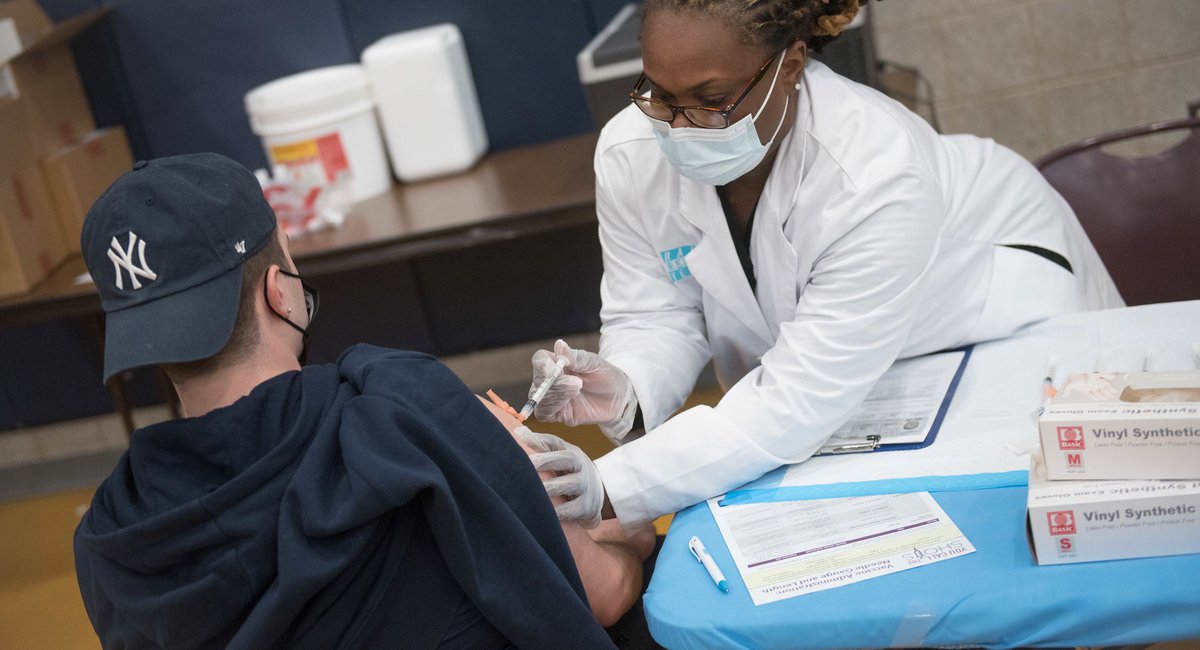
A fresh coronavirus strain that is quickly gaining traction abroad has been detected in New York and other parts of the country through a federal airport COVID-19 testing program, the U.S. Centers for Disease Control and Prevention has confirmed.
The strain, NB.1.8.1, has been found in countries experiencing COVID-19 outbreaks, including China, and is arriving in the United States just as health officials signal changes in guidance on COVID-19 vaccines that could restrict access to the next round of booster shots this fall.
But despite the flurry of attention the variant has received, it does not pose a major new risk to public health, according to the World Health Organization’s assessment of early data on the strain. NB.1.8.1 does not appear to cause more severe disease than other strains in circulation, although it may be more transmissible, according to WHO.
It also remains extremely rare in the United States.
Only two cases of NB.1.8.1 have been detected in New York state so far, and fewer than 20 have been found nationwide, according to the state health department and CDC, respectively.
City data shows this latest version of the virus has yet to rank among the most dominant variants in the five boroughs, where overall cases have been declining since late March. It is also still too rare to register on the CDC’s COVID-19 Data Tracker dashboard, according to Belsie González, a spokesperson for the agency.
“When it comes to the spike protein sequence, it doesn’t look particularly concerning to me,” said Andy Pekosz, a professor of molecular microbiology and immunology at Johns Hopkins University’s Bloomberg School of Public Health.
NB.1.8.1 appears to be recognized by antibodies that have been generated by other recent variants, Pekosz explained. “So it doesn’t look like a particularly worrisome variant in terms of how well it can evade population immunity,” he said.
Rachel Vick, a spokesperson for the city health department, said the agency “has a robust disease surveillance system and is monitoring the situation, as we do for any potential threats that could impact the health of New Yorkers.”
The state health department is also monitoring the variant, along with other COVID-19 strains, said Marissa Crary, a spokesperson for the agency.
While NB.1.8.1 may be laying low in New York so far, the virus overall does not appear to be going away. The city continues to experience seasonal surges of COVID-19 and some who get it end up with long-term health issues.
Updated COVID-19 vaccines are released each fall in an attempt to match the most dominant strains in circulation. The CDC published a study in February finding that vaccination with the shots approved last year reduced the risk of COVID-19-related emergency department and urgent care visits.
But this year, COVID-19 vaccines could become less accessible for some New Yorkers.
U.S. Health Secretary Robert F. Kennedy Jr. announced this week that the CDC is no longer recommending COVID-19 vaccination for “healthy children and healthy pregnant women,” raising concerns among many public health experts.
“If this announcement becomes federal policy, it would restrict access to safe and effective COVID vaccines for pregnant people and children, increasing the risk of serious illness and hospitalization,” Crary of the state health department said in a statement.
In addition to influencing medical guidance, recommendations from the CDC help determine which shots are covered by insurance.
Officials with the U.S. Food and Drug Administration have separately said they plan to restrict approvals for COVID-19 vaccines this fall to people over 65 and those with certain health conditions, while conducting additional research on the shots for healthy people.
Related Posts
Stay Informed With the Latest & Most Important News
Previous Post
Next Post
Previous Post

Next Post








Advertisement