Now Reading: Stock market today: Live updates
-
01
Stock market today: Live updates

Volatility spikes in morning trading
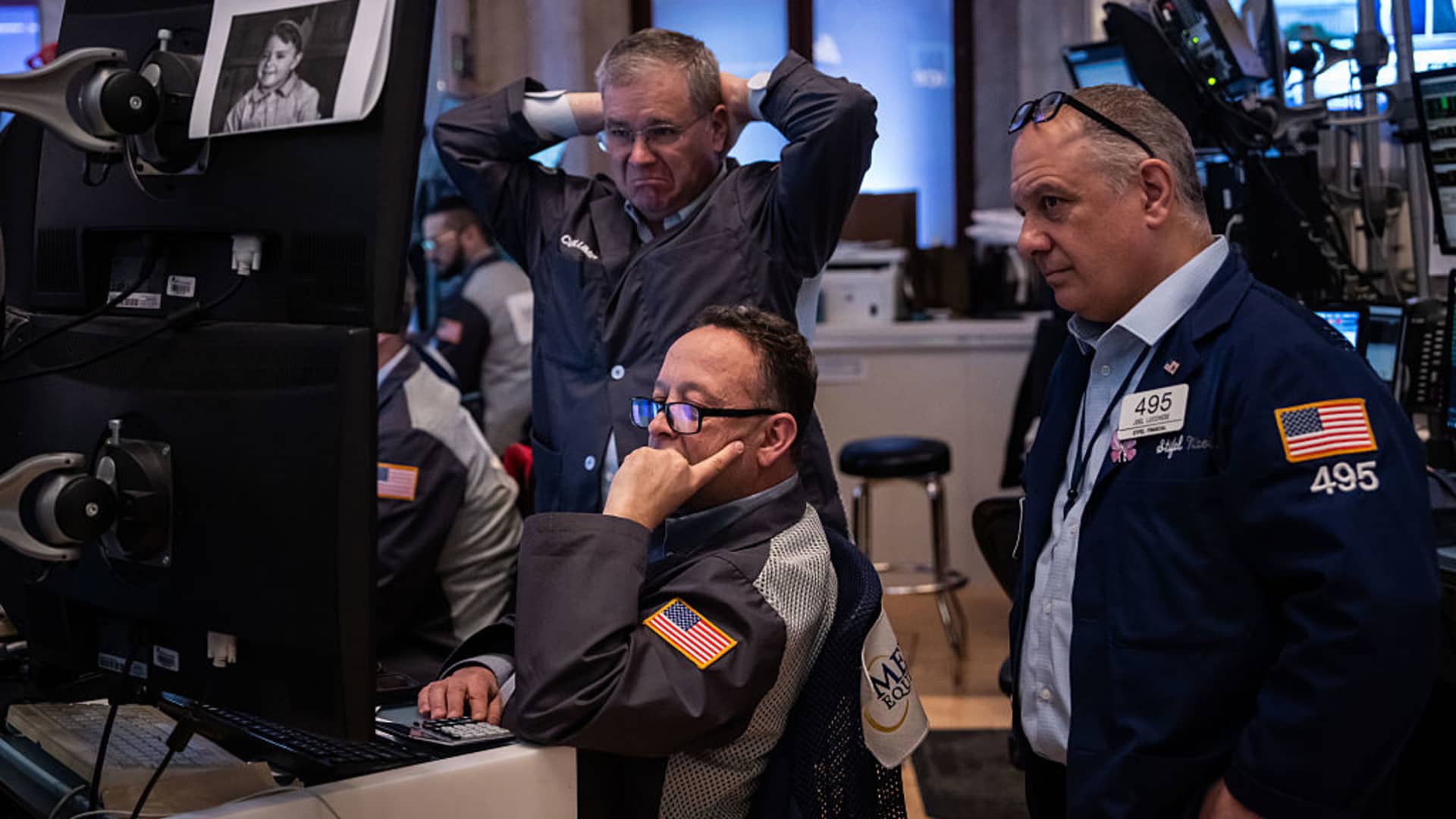
Volatility spiked on Tuesday, with a raft of macroeconomic concerns, including President Donald Trump’s tariffs, weighing on investors/adding to uncertainty.
Wall Street’s fear gauge, the CBOE Volatility Index, surged more than 25% to 19.26.

.VIX, 1-day
Stocks kick off September in the red
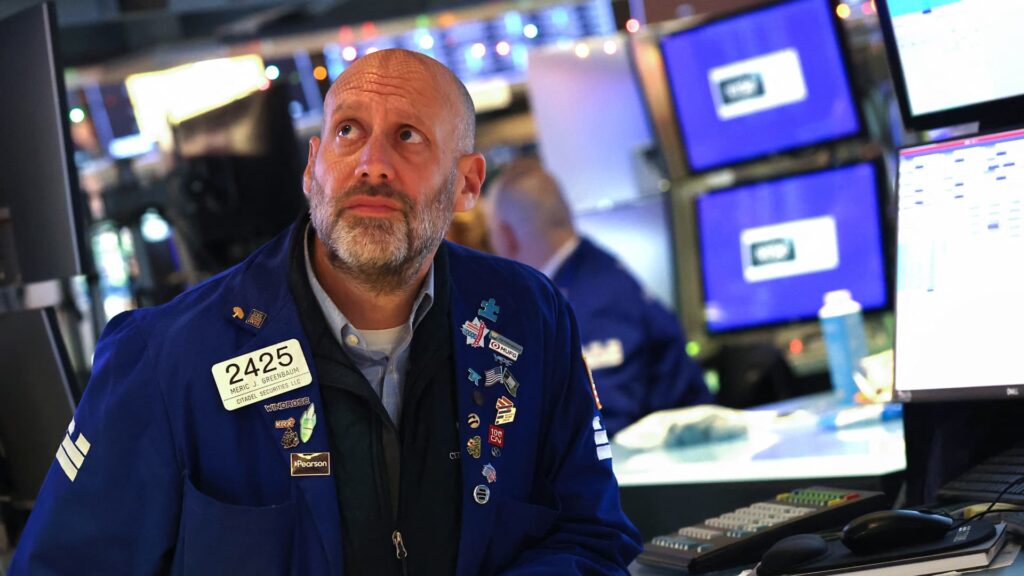
Stocks traded lower on Tuesday morning, starting September off on a sour note.
The S&P 500 fell 1.4% just after the opening bell, while the Nasdaq Composite dropped 1.8%. The Dow Jones Industrial Average also slid 560 points, or 1.2%.
— Sean Conlon
Stock making the biggest premarket moves
Here are some of the stocks moving in premarket trading:
- PepsiCo — Shares gained 4% after The Wall Street Journal reported, citing sources, that activist Elliott Management had taken a $4 billion stake in the snack and beverage giant.
- Air Lease — The stock popped 6.2 6% after the aircraft leasing company reached a merger deal with Apollo, Brookfield, SMBC Aviation Capital and Sumitomo.
- Cytokinetics — The biopharmaceutical company jumped 26% after it said a clinical trial of its heart disease drug, aficamten, showed a meaningful improvement in patients with symptomatic obstructive hypertrophic cardiomyopathy, than the standard of care, metoprolol.
To see more names moving before the bell, read the full story here.
— Michelle Fox
Stock futures around session lows as yields reach new highs
U.S. equity futures reached new lows of the session Tuesday as Treasury yields rose to new heights.
Just after 8:45 a.m. ET, futures tied to the Dow Jones Industrial Average fell 420 points, or about 0.9%, to 45,181.00. S&P 500 futures and Nasdaq-100 futures pulled back 1.1% and 1.5%, respectively.
Meanwhile, the 30-year Treasury yield rose more than 7 basis points to 4.99%. The 10-year Treasury yield also gained more than 7 basis points, reaching 4.30%.
The moves come after a federal appeals court struck down most of President Donald Trump’s tariffs as illegal on Friday. The ruling raises the likelihood that the federal government will have to repay the money it collected in tariff revenue.
— Sean Conlon
Constellation Brands shares drop after Modelo owner cuts outlook
Packages of Modelo Especial beer are displayed for sale in a grocery store on June 14, 2023 in Los Angeles, California.
Mario Tama | Getty Images
Constellation Brands shares fell nearly 8% in premarket trading Tuesday after the brewer slashed its full-year guidance, citing weakness in consumer demand.
The company, which owns Modelo and Corona, now expects its earnings for the period to come in between $10.77 and $11.07 per share, down from its prior guidance of $12.07 and $12.37 per share.
“We continue to navigate a challenging macroeconomic environment that has dampened consumer demand and led to more volatile consumer purchasing behavior since our first quarter of fiscal 2026,” CEO Bill Newlands said in a statement.
Newlands added that high-end beer buy rates “decelerated sequentially” in the past several months amid declines in trip frequency and spend per trip. He also noted that declines in high-end beer buy rates for Hispanic consumers were “more pronounced” than those in the general market, saying that “has an outsized impact on our Beer Business compared to the broader beer category.”
“We remain resolutely focused on continuing to execute against our strategic objectives, including driving distribution gains, disciplined innovation, and investing behind our brands,” the CEO continued.
STZ, 1-day
Signet shares jump after earnings and revenue beat
Shares of Signet Jewelers rose more than 5% in the premarket on Tuesday after the jewelry retailer’s second-quarter results topped Wall Street’s expectations.
Signet posted adjusted earnings of $1.61 per share on $1.54 billion in revenue for the quarter, while analysts polled by FactSet had called for $1.24 in earnings per share and $1.50 billion in revenue.
The company also raised its earnings and revenue guidance for the full year.
SIG, 1-day
Kraft Heinz confirms company split
Characters at the Berkshire Hathaway company Kraft Heinz booth pose with a reporter at the shareholder shopping day as part of the Berkshire Hathaway annual meeting weekend in Omaha, Nebraska, May 5, 2017.
Rick Wilking | Reuters
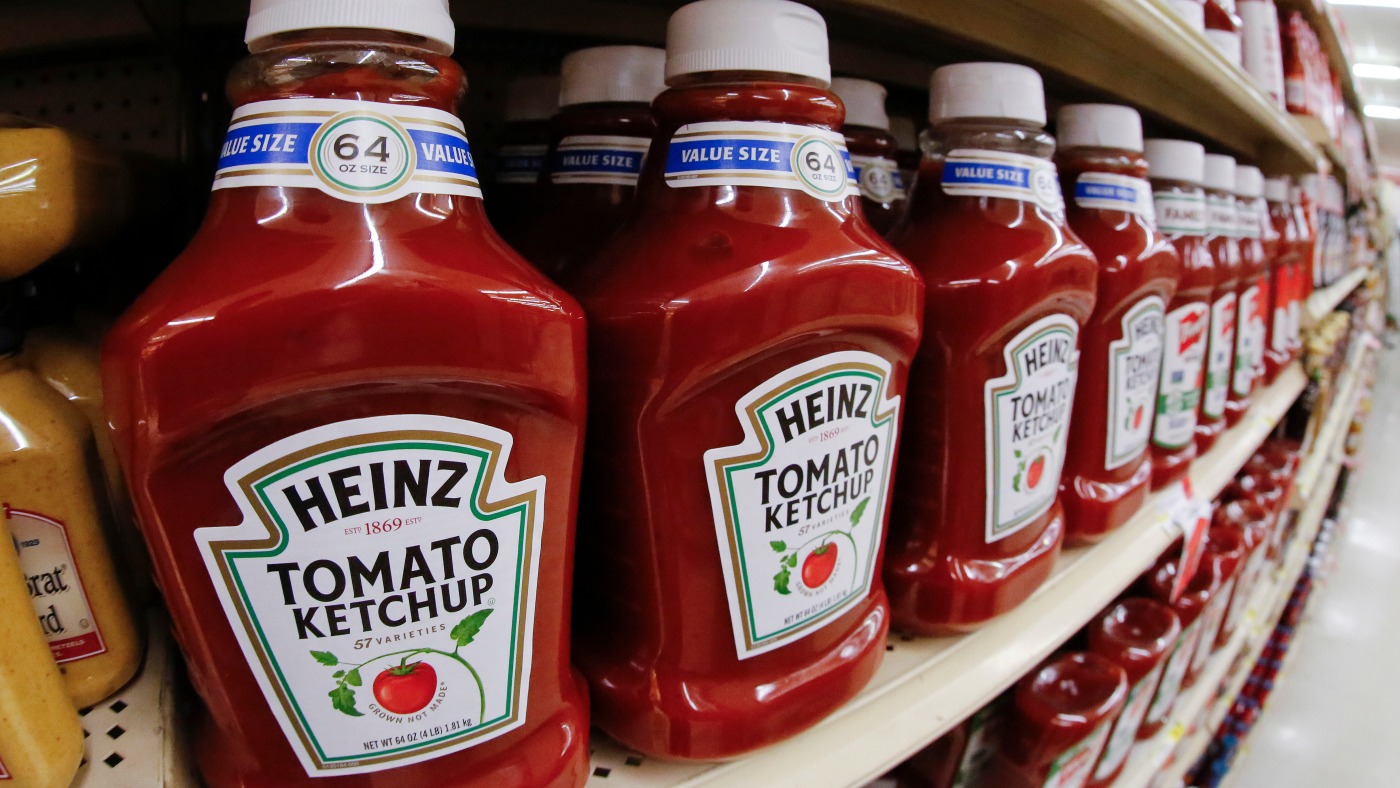
Kraft Heinz on Tuesday confirmed earlier reports that it would split up into two publicly traded companies through a tax-free spinoff. The names of the two new companies will be determined at a later date.
One unit, which currently goes by “Global Taste Elevation,” will include Kraft’s shelf-stable products such as Heinz and Kraft Mac & Cheese. The other one, “North American Grocery,” will include brands such as Oscar Mayer and Lunchables.
The transaction is expected to be completed in the second half of next year. Shares were little changed in the premarket.
— Fred Imbert
September is the worst month for stocks
Traders work on the floor at the New York Stock Exchange (NYSE) in New York City, U.S., August 26, 2025.
Brendan McDermid | Reuters
September is historically the worst month for stocks. In data going back to 1950, the S&P 500 has averaged a 0.7% decline in September, both for all years and post-election years, according to the Stock Trader’s Almanac.
In recent years, that track record has gotten worse. Over the past five years, the S&P 500 has averaged a 4.2% drop in September. Over the last 10 years, the index has dropped 2% on average.
— Sarah Min
Asia markets close mixed as investors assess SCO summit amid tariff uncertainty
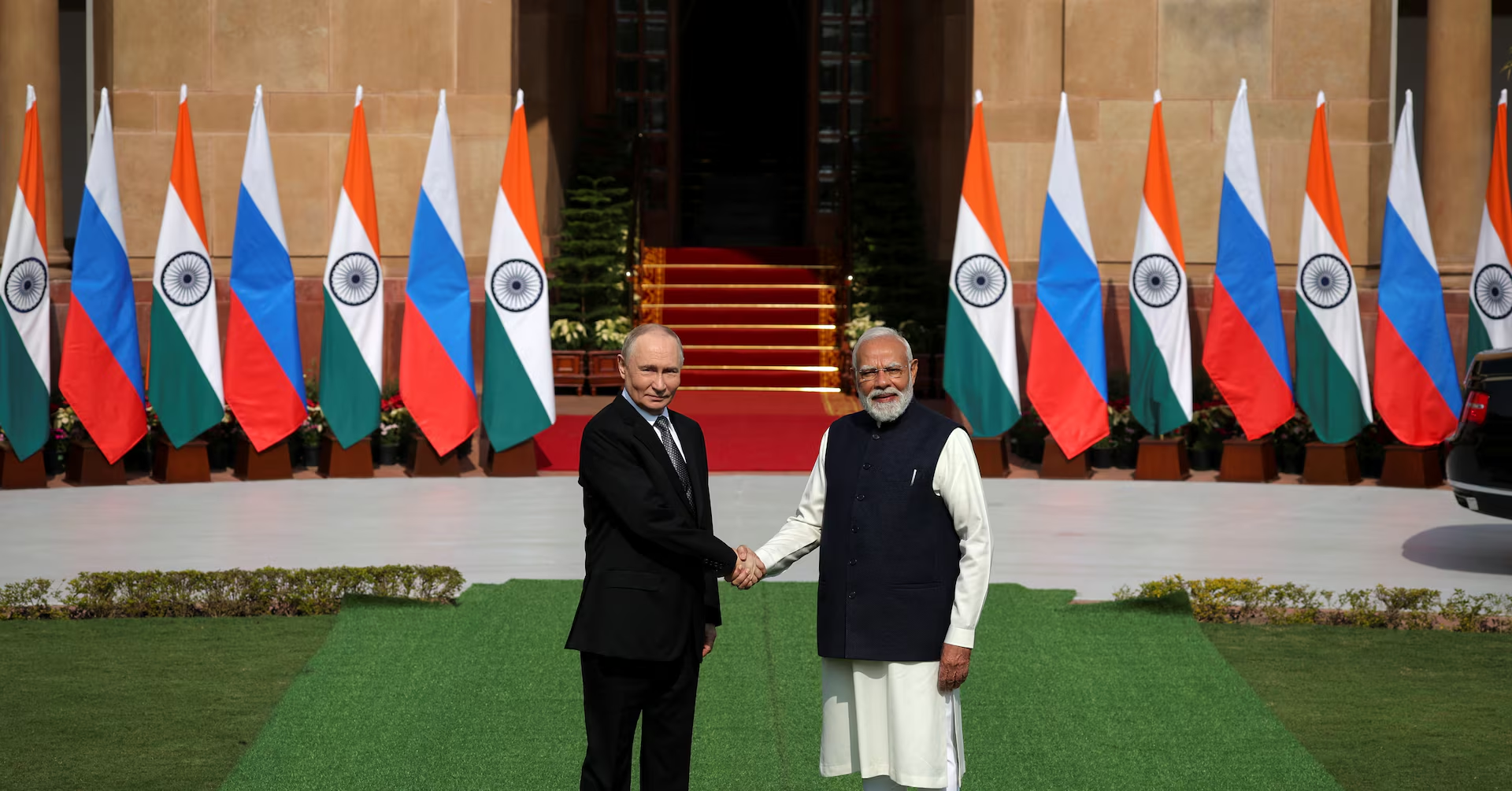
Asia-Pacific markets closed mixed as investors assessed the Shanghai Cooperation Organization meeting of leaders in Tianjin, with tariff uncertainty weighing on sentiment.
This comes after a U.S. federal appeals court on Friday ruled that most of President Donald Trump’s global tariffs are illegal.
India markets were in focus after Trump said that India had offered to reduce its tariffs on U.S. imports to zero.
“They have now offered to cut their Tariffs to nothing, but it’s getting late. They should have done so years ago,” Trump wrote on Truth Social. He added that the U.S.’ relationship with India was “one sided.”
India’s benchmark Nifty 50 rose 0.29%, while the BSE Sensex index advanced 0.26% as of 1:40 p.m. Indian Standard Time (4:10 a.m. ET).
Japan’s Nikkei 225 ended the day 0.29% higher at 42,310.49 after choppy trade, while the broader Topix index moved up 0.61% to 3,081.88.
Suntory Beverage & Food came in the spotlight following reports that its CEO and Chairman Takeshi Niinami resigned following a police investigation into his purchase of a potentially illegal supplement.
Shares of the Japanese soft drinks and wellness food products producer ended the day 2.94% higher.
Over in South Korea, the Kospi index increased by 0.94% to 3,172.35, while the small-cap Kosdaq added 1.15% to 794.
Hong Kong’s Hang Seng index fell 0.47% to close at 25,496.55, while mainland China’s CSI 300 dropped 0.74% to 4,490.45.
Australia’s S&P/ASX 200 moved down 0.3% to end the day at 8,900.60.
The Australian Securities and Investments Commission said that its review panel had imposed a fine of $3.88 million Australian dollars ($2.52 million) on a local unit of French lender Societe Generale for failing to prevent suspicious orders in the electricity and wheat futures markets.
An investigation by the regulatory body found that Societe Generale Securities Australia, which is one of the largest participants on the ASX 24 derivatives market, had allowed two of its clients to place 33 suspicious orders between May 2023 and February 2024. That “volatile period” saw supply issues in global energy and wheat markets caused by the Russia-Ukrainian War, among other factors, the panel said.
Meanwhile, the country’s current account balance for the April to June quarter came in at a deficit of AU$13.7 billion Australian dollars, compared to the AU$14.7 billion deficit the quarter before and the AU$16 billion deficit forecast by economists polled by Reuters.
— Amala Balakrishner
Most Trump tariffs ruled illegal by appeals court
US President Donald Trump speaks before signing an executive order in the Oval Office of the White House on April 9, 2025 in Washington, DC.
Saul Loeb | Afp | Getty Images
A federal appeals court ruled Friday that most of President Donald Trump’s global tariffs are illegal, striking a massive blow to the core of his aggressive trade policy.
The U.S. Court of Appeals for the Federal Circuit held in a 7-4 ruling that the law Trump invoked when he granted his most expansive tariffs — including his “reciprocal” tariffs — does not actually grant him the power to impose those levies.
“The core Congressional power to impose taxes such as tariffs is vested exclusively in the legislative branch by the Constitution,” the court said. “Tariffs are a core Congressional power.”
— Kevin Breuninger, Dan Mangan
Stock futures open higher
Stock futures opened higher Monday night.
Dow Jones Industrial Average futures rose 19 points. S&P 500 futures were higher by about 0.11% and Nasdaq 100 futures added 0.14%.
— Sarah Min
Related Posts


Stay Informed With the Latest & Most Important News







Advertisement