Now Reading: Stock market today: Live updates
-
01
Stock market today: Live updates

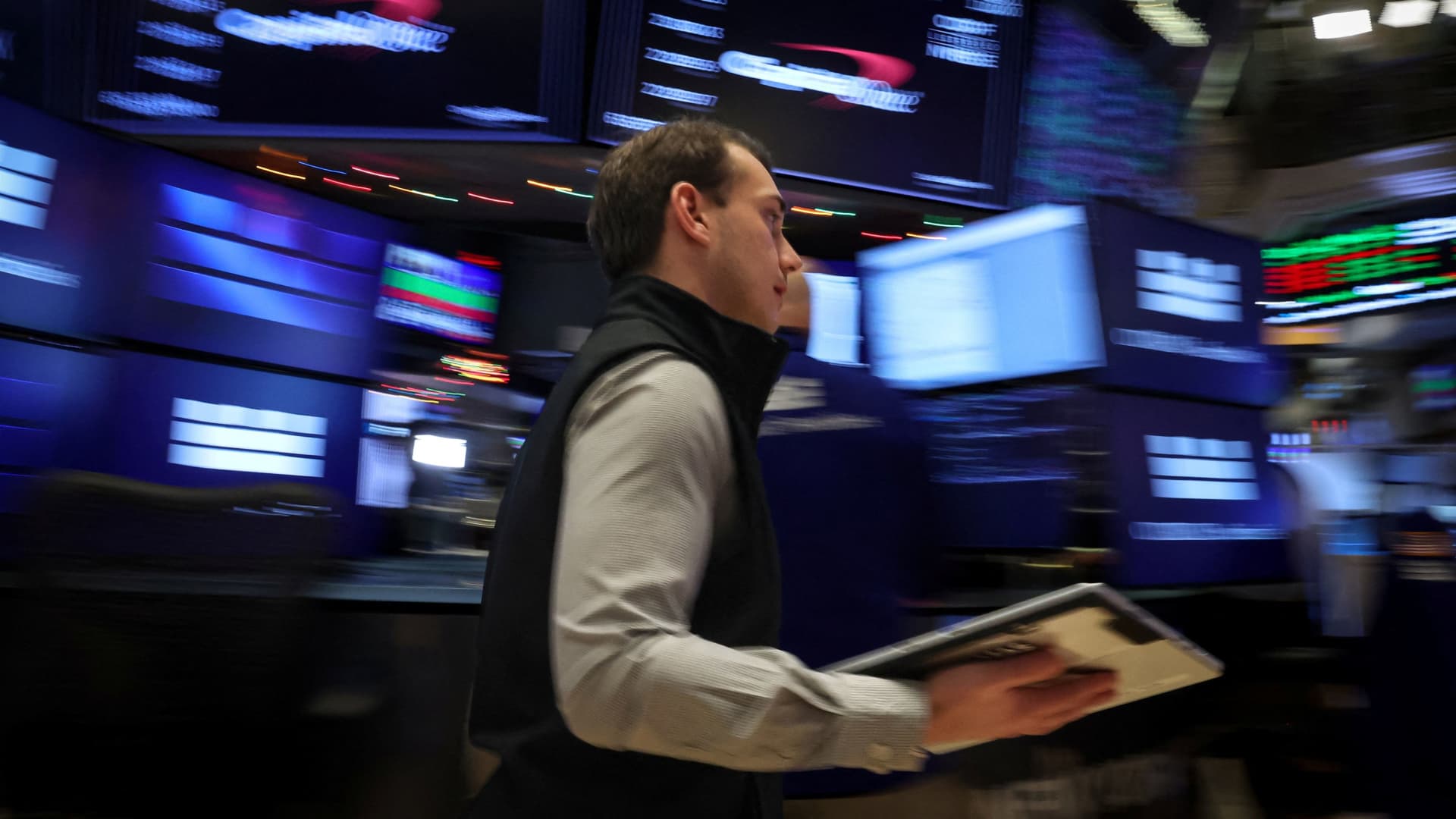
Traders work on the floor at the New York Stock Exchange in New York City, U.S., Dec. 10, 2025.
Brendan McDermid | Reuters
Stock futures fell Thursday as Oracle’s results reignited fears about high-flying tech stocks even after the Federal Reserve’s latest interest rate cut gave a boost to U.S. equity markets in the prior session.
S&P 500 futures slid 0.6%, while Nasdaq 100 futures shed 0.8%. Futures tied to the Dow Jones Industrial Average dipped 101 points, or 0.2%.
Oracle shares tumbled 11% after the cloud computing company posted disappointing quarterly revenue and raised its spending forecast. The report added more fuel to the debate about how quickly tech companies will be able to see returns on their AI investments. Other AI plays were also trading lower in extended trading, including Nvidia, which was down 1%, and CoreWeave, which fell more than 2%.
Stocks rose in Wednesday’s session and got a lift after a divided Fed announced an interest rate cut for the third time this year and ruled out a rate hike. The central bank’s Federal Open Market Committee cut its key overnight borrowing rate by a quarter percentage point to a 3.5%-3.75% range and signaled a slower pace of rate cuts ahead.
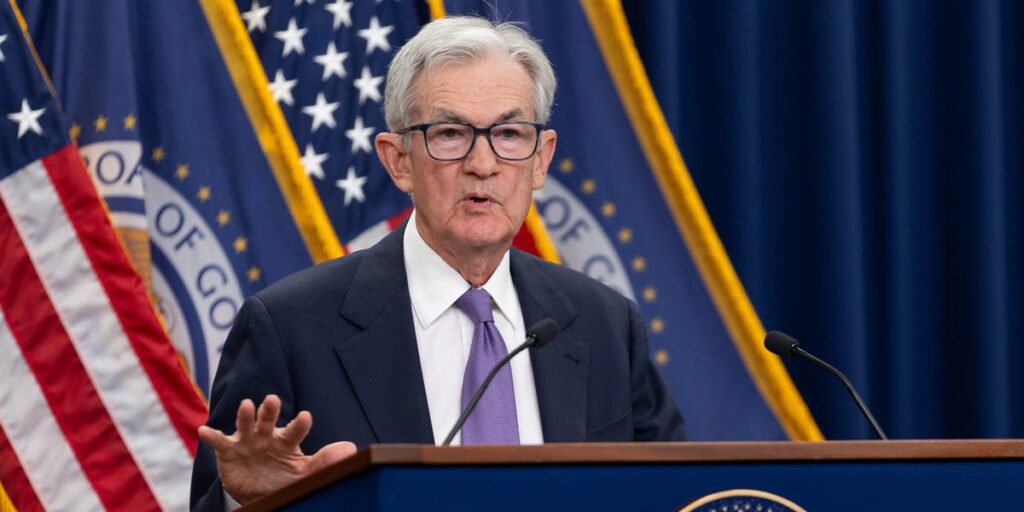
Fed chair Jerome Powell said the central bank is “‘well positioned to wait and see how the economy evolves” and noted President Donald Trump’s tariffs have been a driver of inflation.
The three major indexes closed in the green, with the 30-stock Dow jumping about 497 points, or nearly 1.1%. The Russell 2000 index of small-capitalization stocks notched a record close. Smaller companies tend to benefit more from lower rates than larger companies because their borrowing costs are more closely linked to market rates.
Although markets rallied toward the latter half of Wednesday’s session, some investors suggest being cautious ahead given that the central bank remains in a wait-and-see mode over the path of future monetary policy.
“We’re not surprised to see near term optimism in the markets given that the Fed continues to cut rates even though the economy is growing, however, we think the rose colored glasses may come off once investors realize that the path to lower interest rates may take longer — or may not materialize at all — to the extent that they believe it will,” said Chris Zaccarelli, chief investment officer for Northlight Asset Management.
F.L. Putnam Investment Management chief market strategist Ellen Hazen said that greater uncertainty regarding future interest rates and conflicting data around the state of the U.S. economy could “lead to higher volatility and risk premia across risk markets like equities as we go into 2026.”
Related Posts

Stay Informed With the Latest & Most Important News
Previous Post
Next Post











Advertisement