Now Reading: Stock market today: Live updates
-
01
Stock market today: Live updates

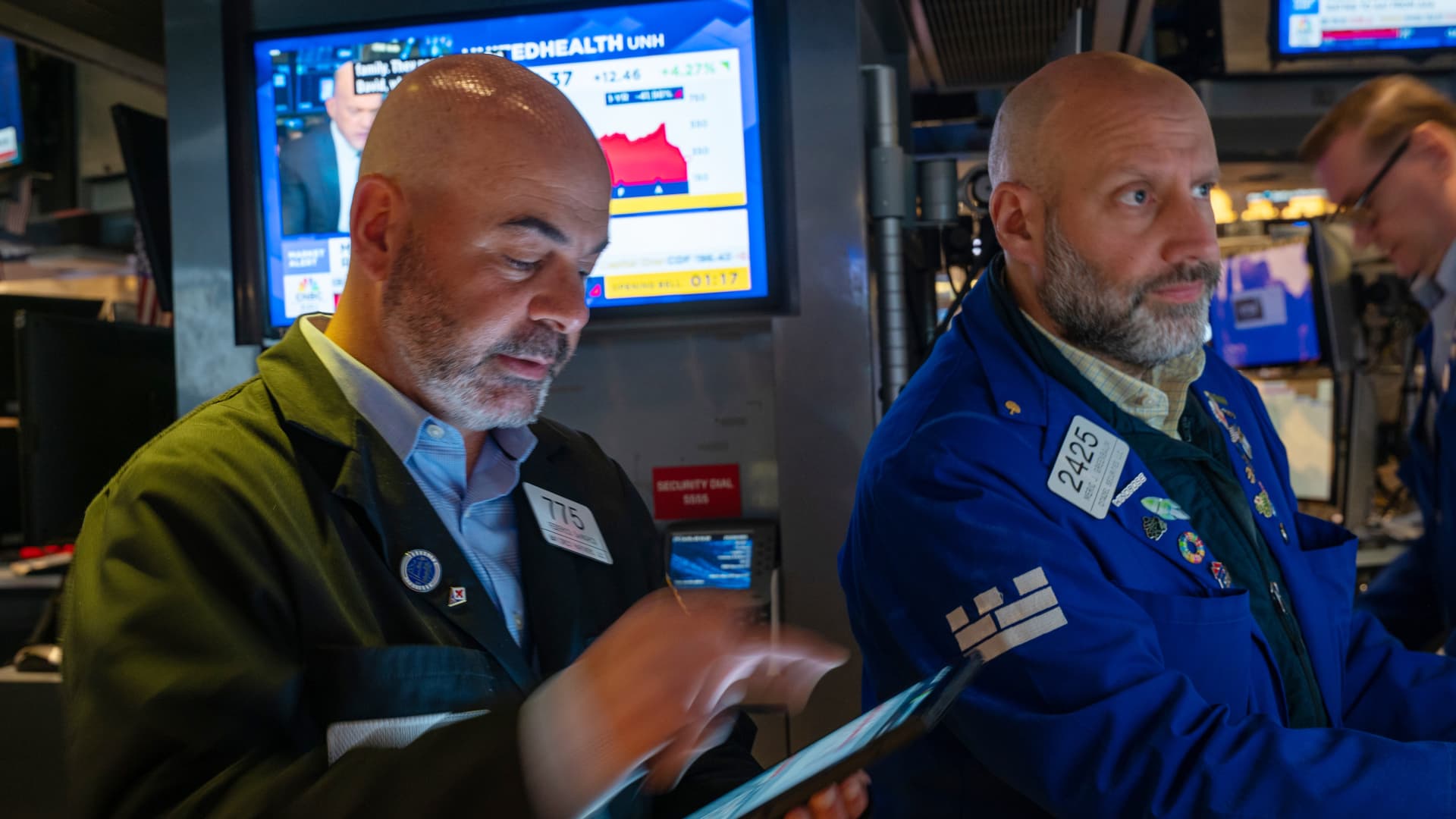
Traders work on the floor of the New York Stock Exchange (NYSE) on May 19, 2025 in New York City.
Spencer Platt | Getty Images News | Getty Images
Stocks fell Wednesday as traders fretted over another move higher in Treasury yields and monitored the progress on a new U.S. budget bill that could put pressure on the country’s deficit.
The Dow Jones Industrial Average lost 314 points, or 0.7%. The S&P 500 shed 0.1%, while the Nasdaq Composite added 0.4%.
The 30-year Treasury bond yield moved back above 5% on Wednesday, while the benchmark 10-year Treasury note yield traded over 4.53%. Yields topped those key levels earlier in the week after Moody’s downgraded U.S. bonds late Friday.
The latest moves come as traders look to Washington as Republican leaders work to finalize a budget bill that would lower taxes. However, the measure has faced pressure from GOP members looking for higher deductions on state and local taxes. Investors also worry the measure could worsen the U.S. deficit.
“The questions now is, from a fiscal perspective, what will the tax bill look like, and will it undo all of the recent fiscal frugality by simply raising the debt level at a slower rate of pace? So I think that’s why the 10-year yield is moving higher — because investors are worried that we’re really not doing anything to slow the pace of inflation and to reduce the debt,” Sam Stovall, CFRA Research chief investment strategist, told CNBC in an interview.
“Now it seems as if there is a greater that the tax bill will pass, and that could end up simply continuing to raise the overall debt level,” he continued.
UnitedHealth was the worst-performing Dow member, losing more than 5% after a downgrade from HSBC. Major tech-related stocks Apple and Amazon dropped more than 1% as rates increased.
Wednesday’s action comes after a tough session for the three major averages. The S&P 500 ended a six-day win streak, while the Nasdaq saw its first negative day in three.
The major averages have staged sharp recoveries since a sell-off last month that engulfed markets after Trump unveiled steep tariffs on imported goods. The S&P 500 and Nasdaq are up more than 14% and 19%, respectively, in the past month.
“Some [investors] are a little worried that we’ve gone too far, too fast, and are due for some digestion of recent gains,” Stovall added.
Related Posts


Stay Informed With the Latest & Most Important News










Advertisement