Now Reading: Swansea man swaps personal trainer for AI and is ‘strongest ever’
-
01
Swansea man swaps personal trainer for AI and is ‘strongest ever’


 Leah Walsh
After a festive period filled with indulgent treats and relaxation, many people head into January looking to get their fitness back on track.
But could AI be changing the fitness industry by offering an alternative to personal trainers?
Richard Gallimore, 23, from Swansea, has been using AI for his fitness and diet plans, he says he has never felt stronger, increasing his bench press from 70kg (150lb) to 110kg (240lb).
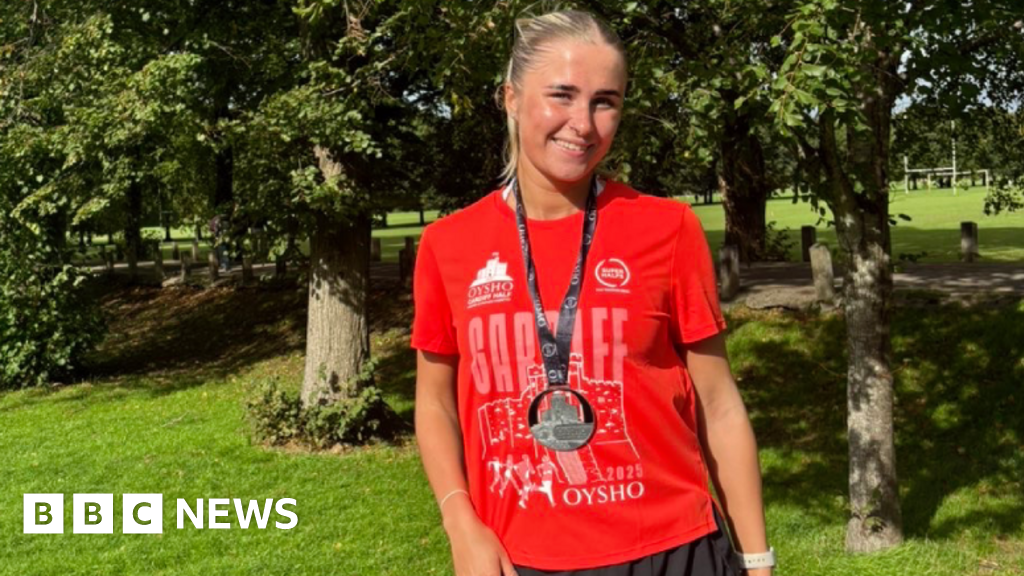
Meanwhile, 21-year-old Leah Walsh, from Aberdare, Rhondda Cynon Taf, used an AI tool to train for a half marathon, and liked the freedom to ask it questions any time of day – something she felt was not possible with a personal trainer.
Personal trainer Dafydd Judd, from Cardiff, said AI can be useful to speed up progress, but believes it will never replace the human connection and accountability that in-person coaching offers.
 Richard Gallimore
Richard used AI to get fit after being forced to walk a running event last May, adding: “I just knew I need to sort myself out.”
The free tool built a workout and diet plan tailored to his goals, and created structured routines.
“I train for about two hours a day and I’ve seen a real difference,” he said.
A Which? survey in November 2024 compared prices for 17 of the biggest gym brands and found the average membership cost £38 a month, based on standard full-access plans.
Prices ranged from £23 at the cheapest chain to £132 at the most expensive.
According to research by PureGym, personal trainers set their own rates, typically £30-£65 per 45-60 minute session outside London and about £45-£65 in London.
Clients will use a trainer once or twice a week and work with them for a few months, it found, but said it was completely flexible.
 Getty Images
Leah used an AI tool for last-minute training for the Cardiff Half Marathon.
She asked it to create a plan combining running and the gym, and it produced an 11-week programme tailored to her race date and goals.
Leah then tweaked the schedule to suit her lifestyle, which she said was convenient.
In 2024, Leah used an AI-powered running app that gave her personalised plans with audio coaching and pace setting for her first half marathon.
The following year, she chose a different tool because it was cheaper and she could ask it questions at any time of day. She finished a minute faster than her goal time.
Leah said she did not want to feel pressure from a human personal trainer.
“With AI you have to motivate yourself, which I quite like,” she said.
 Michael James
Dafydd, 37, a personal trainer for 12 years, specialises in older adults and injury rehabilitation. He said some of his clients also use AI.
“I think it’s very valuable, more knowledge is good,” he said.
“I think the more that people are online the more they’ll want human connection because they want the warmth from the understanding that is missing from a computer.”
Dafydd said AI can educate clients and make coaching more effective.
But he said real commitment comes when people show up in person for training.
“As useful as it is at 2am, a computer won’t keep you accountable at 7am before work,” Dafydd added.
For many, he said, the gym is a place to leave phones behind and stop being glued to screens.
Related Posts


Stay Informed With the Latest & Most Important News
Previous Post
Next Post











Advertisement